Our Research
Our Research
Our
Lab is for Translational Research in Hematology. Its main strength is the tight
collaboration and involvement of physicians from the Institute of Hematology at
the Davidoff Cancer Center, Rabin Medical Center. Our primary field of interest
is finding new or better therapies for the treatment of incurable hematological
malignancies. Our projects focus on understanding the effect of new agents on
different leukemia and lymphoma cell lines and patient samples and exploring the
deleterious side effects caused by customary agents used today. In addition, we
are studying the molecular pathways involved in the initiation and maintenance
of hematological tumorigenesis and are trying to understand the effect of the
different agents on these molecular pathways.
We
apply cutting-edge technologies including molecular, protein and cellular
biology, confocal microscopy, live cell imaging, NGS analyses, cell line and murine
models etc.
Research
Topics
Pathogenesis of tyrosine kinase
inhibitor (TKI) associated vascular disease in chronic myelocytic leukemia
(CML).
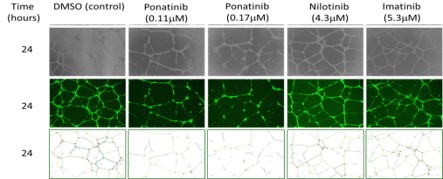
Gover-Proaktor A et al Ponatinib reduces viability, migration, and functionality of human endothelial cells. Leuk Lymphoma. 2017;58(6):1455-1467.
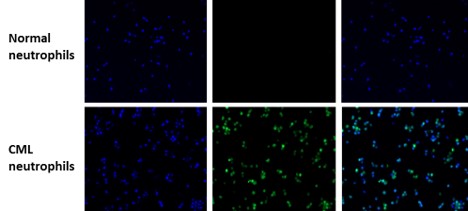
Increased extrusion of DNA strands and H3cit expression in CML neutrophils Immunofluorescent images of CML patient vs. healthy, matched control neutrophils. DNA strands were stained with DAPI and histone H3cit was stained with H3cit specific antibody. Cells were observed by Apotome microscope (X40).
NETosis in CML and the effect of
tyrosine kinase inhibitors (TKIs) on NETosis.
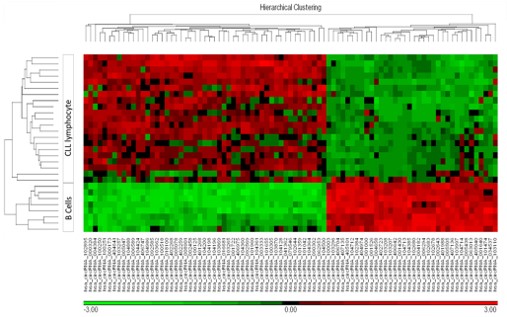
<span style="font-weight: bold;">CLL cells exhibit a different circRNA profile compared to normal B cells</span>. Supervised hierarchical clustering displaying 87 differentially expressed genes (36 downregulated and 51 upregulated) in CLL cells compared to normal B cells using a fold-change difference cutoff of 3-fold and FDR 1x10⁻⁵
The role of circular RNA (circRNA)
in chronic lymphocytic leukemia (CLL).
Engineering of exosomes to target
specific cancer cells.
- Mechanism of the anti-tumoral
activity of deferasirox on mantle cell lymphoma.